

Key Takeaways
- Kojic acid is a brightening ingredient that helps improve the look of dark spots and uneven tone.
- Dark spots on the body often come from friction, shaving, breakouts, and sun exposure.
- Body formulas cover larger areas and suit skin that's often thicker than facial skin.
- Patch testing and daily sunscreen on exposed skin help you avoid irritation and protect your progress.
- Body skin usually takes a few months to show a visible change, so consistency matters more than strength.
Most of us spend years fine-tuning a face routine, then barely give the rest of our skin a second thought. Summer ends, and you notice darker knees, a shadow along the underarms, or a few marks on your back that weren't there in spring. Body skin builds up pigment the same way facial skin does. It just tends to get a lot less attention.
Kojic acid for body care is one of the easiest ways to help those spots look lighter. It's a well-known brightening ingredient, and it shows up more and more in sprays and creams made for larger areas. Paired with a few daily habits and a good body care routine, it can help those patches look smoother and more even over time.
What Is Kojic Acid?
Kojic acid comes from fungi, most famously the koji mold used to ferment rice for sake and soy sauce. Researchers in Japan first identified it in the early 1900s, and skincare picked it up a few decades later.
What makes it popular is how it interacts with tyrosinase, the enzyme your skin relies on to make melanin. Kojic acid slows that process down, helping dark spots appear lighter and keeping tone more balanced. It's also mild compared with many other brightening options, which is part of why it works so well in facial and body care.
Benefits of Kojic Acid
The biggest kojic acid benefit has to do with evening out your skin tone. It helps improve the look of dark spots and patchy areas, which on the body tend to show up on knees, elbows, and anywhere skin rubs or gets shaved.
Kojic acid also layers well with other ingredients. Body formulas often combine it with niacinamide for extra tone support or with exfoliating acids that clear away the rough, dull layer sitting on top of dark patches. That combination matters most where skin on the body, like the knees and elbows, is thicker and builds up dead cells faster than the skin on your face.
Why Dark Spots Show Up on Your Body
Body dark spots form the same way facial ones do. Something prompts your skin to produce extra melanin in one area, and that pigment lingers. What's different is the trigger. On the body, it's often something you do every day, like shaving or wearing snug clothes.
Sun Exposure on Shoulders, Arms, and Legs
Your shoulders and arms catch a lot of sun, especially in warmer months, and they're easy to forget when you're applying sunscreen. Years of that exposure can leave freckle-like spots and patches. The tops of the shoulders and the backs of the hands are common places to see them first.
Friction From Clothing and Skin Rubbing Together
Repeated rubbing slowly irritates the skin, and irritated skin responds by making more pigment. This is why inner thighs and underarms often look darker than the surrounding skin. Tight waistbands, bra straps, and snug workout clothes can leave the same kind of mark along the lines where they sit.
Shaving, Waxing, and Ingrown Hairs
Hair removal is hard on skin. Razor burn and ingrown hairs all cause inflammation, and that inflammation can leave darker spots once it heals. Underarms, legs, and the bikini line tend to show this most, since they get shaved or waxed regularly.
Breakouts on the Back and Chest
These breakouts can leave marks just like the ones on your face. Sweat, tight clothing, and heavy products can all contribute to blemishes on the back and chest, and each one may leave a flat brown spot behind.
Dry, Thicker Skin on Knees and Elbows
Knees and elbows take a lot of pressure from leaning and kneeling, and the skin there is naturally thicker. Dead skin cells build up on the surface, which makes the area look darker and rougher than it really is. Keeping that layer smooth and moisturized goes a long way.
How to Use Kojic Acid in Your Body Care Routine
A body routine with kojic acid doesn't need to be complicated. It works best when you focus on problem areas and give it time.
Pick the Areas That Need It Most
Start by looking at where your dark spots actually are. For most people, that's knees, elbows, underarms, inner thighs, or the back. Focusing on these spots keeps your routine simple, and it's easier to notice progress when you know exactly what you're watching.
Build a Kojic Acid Body Care Routine
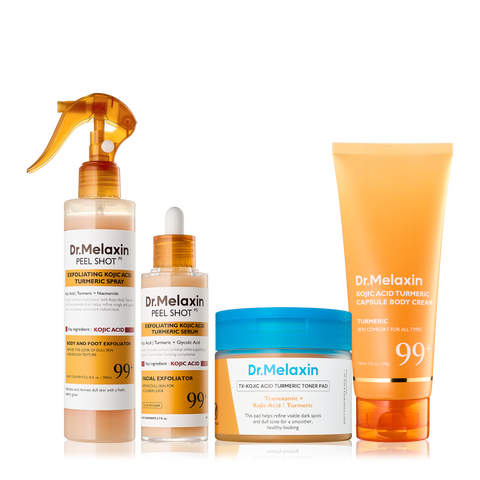
Kojic acid body care works best as a part of your overall skincare routine. To keep it simple, the Kojic Acid Amber Face & Body Care Set covers body and facial skincare. On the body, the routine looks like this:
- Spray the Peel Shot Spray onto dry skin on areas like your back and elbows, rub gently, and rinse it off.
- After your shower, smooth the Capsule Body Cream over your body to lock in moisture and keep skin comfortable.
The face steps follow the same idea. The Toner Pad has an embossed side for smoothing texture and a soft side for targeted dark spot care, and the Turmeric Serum is massaged in until its beads melt, then rinsed off.
Kojic acid is at the center of the set and helps visibly improve the appearance of dark spots and uneven pigmentation.
The formulas also include AHA and PHA to gently clear away dead skin cells, which is a big help on rough knees and elbows.
Retinol supports skin renewal to improve the look of uneven texture, so your skin appears smoother and more refined.
Niacinamide supports your skin's moisture barrier while helping tone look more even, and turmeric adds an antioxidant boost that helps soothe stressed-looking skin.

Patch Test Before Full Use
Body skin varies a lot from place to place. The skin on your back can handle more than the skin on your inner thighs or underarms. Before using a new product across a large area, try it on a small patch for a few days, like the inside of your elbow. If your skin stays calm, you're good to go.
Protect Exposed Skin From the Sun
Exfoliating acids and retinol make skin more sensitive to sunlight, and UV exposure can darken spots again. On days your arms, legs, or shoulders will be out, apply a broad-spectrum SPF 30 or higher to those areas.
Give It a Few Months
Body skin is often thicker than facial skin and can take longer to show change. Most people start to notice dark spots looking lighter after two to three months of steady use. Taking photos of the same area in the same light every few weeks makes it easier to see changes you might overlook day to day.
Simple Habits for Smoother, More Even-Looking Skin
A good routine does most of the work, and a few everyday choices help your skin hold on to the progress.
Wear Breathable Fabrics
Breathable fabrics give friction-prone areas a break. Loose cotton or moisture-wicking clothes help, especially for inner thighs and underarms on warm days or during workouts.
Refine Your Shaving Routine
Shaving goes more smoothly with a fresh, sharp blade and plenty of lather. Shave in the direction your hair grows and follow up with a moisturizer to calm the skin. If an area looks irritated, give it a day or two before using exfoliating products there.
Wash Away Sweat as Soon as You Can
Showering soon after a workout keeps sweat from sitting on your back and chest, which helps prevent breakouts and keep the existing ones in check. Leaving any blemishes alone gives them the best chance to heal without a mark.
Exfoliate Regularly
Rough patches on knees and elbows soften up with regular, gentle exfoliation. A light touch works better than a gritty scrub. Finish with a rich moisturizer while your skin is still slightly damp to keep it soft.
Final Thoughts
Dark spots on the body are common, and most have a simple cause, whether it's time in the sun or skin that gets shaved or rubbed often.
Kojic acid for body care helps those spots look lighter and more even, especially alongside gentle exfoliation and a good moisturizer. Focus on the areas that need it most and keep sunscreen on any skin that sees the sun.
Within a few months of steady care, you'll likely notice smoother, more even-looking skin and a body care routine that feels like a small treat at the end of the day.
![[TikTok Bestseller] Gifted Collagen Boost Set](http://drmelaxin.us/cdn/shop/files/ChatGPT_Image_Sep_30_2026_11_10_59_PM.png?v=1790790076&width=480)