

Key Takeaways
- They work on the right spots: Pimple patches are most effective on whiteheads and early bumps, not deep, cystic breakouts.
- What they do: Every patch shields the spot from your fingers, and depending on the type, it also absorbs fluid or delivers active ingredients.
- Match the patch to the stage: Hydrocolloid patches suit spots that have come to a head, active ingredient patches suit early bumps, and dark spot patches target the mark left behind.
- Don't pop first: Put the patch on the pimple as it is, on clean, dry skin, and give it several hours to work.
If you've spent any time on Instagram or TikTok lately, you've seen them: small, clear stickers on cheeks and chins, sometimes right in the middle of a full face of makeup. Pimple patches have gone from a niche K-beauty find to a bathroom cabinet staple, and it's fair to wonder whether they live up to the hype.
So how do pimple patches work, and do they actually make a difference? They do, as long as you use them on the right kind of spot. This guide explains what happens under the patch, which type suits which breakout, and how to get the most out of them.
What Are Pimple Patches?
Pimple patches (also called blemish patches) are small adhesive stickers you place over a single spot. Most are round and clear or skin-toned, and they usually come in a few sizes so you can match the patch to the pimple.
The idea comes from wound care. Hydrocolloid dressings have long been used to protect wounds and keep them moist while they heal, and pimple patches apply the same principle on a much smaller scale. Newer versions go further, with thinner materials and ingredients built into the patch itself.
How Do Pimple Patches Work?
How pimple patches work depends on the type, but most do at least one of the following.
They Absorb Fluid
Hydrocolloid patches are made from a gel-forming material that draws fluid out of a pimple that has come to a head. As it soaks up pus and oil, the middle of the patch turns white or cloudy, which is how you know it's working. The spot flattens, and the skin underneath stays protected and moist while it heals.
They Protect the Spot
Whatever the type, every patch puts a barrier between the pimple and the outside world. That means no fingers picking at it and less friction from your pillow or phone screen. For many people, this is the biggest benefit of all, since picking is one of the main reasons a pimple leaves a mark behind.
They Deliver Active Ingredients
Some patches carry ingredients that work on the skin while you wear them. Blemish patches often include salicylic acid or sulfur, two ingredients known for helping skin look clearer and more refined.
Other patches are made for what happens after the pimple heals. A red or brown mark often stays behind, and patches designed for these marks use brightening ingredients instead:
- Vitamin C helps brighten the skin and fade the look of dark spots over time.
- Tranexamic acid helps reduce the look of discoloration, especially marks that linger.
- Niacinamide helps even out skin tone and supports the skin barrier.
- Vitamin E and ferulic acid work alongside vitamin C and help keep it stable.
Because the patch stays in place, these ingredients stay concentrated on the mark instead of spreading across your face.
The Real Benefits of Pimple Patches
Beyond what happens under the patch, there are practical reasons pimple patches have become so popular:
- They stop you from picking: Touching and squeezing a pimple is one of the main reasons it leaves a mark behind. A patch keeps your fingers off it, even when you don't notice you're reaching for it.
- They deliver targeted blemish care: Strong actives like salicylic acid can dry out the skin around a pimple. A patch keeps them exactly where you need them and leaves the rest of your face alone.
- They're easy to use: There's no cream to wait on and no residue. You press one on and get on with your day.
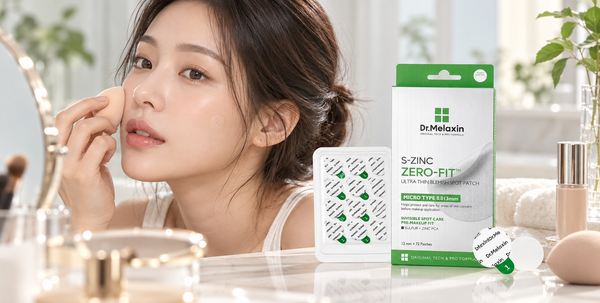
- They work under makeup: Ultra-thin patches sit flat enough for foundation to go right over them, give a blemish a little extra care on days you'd rather not show it.
- They work while you sleep: A patch you put on before bed gets hours to work undisturbed, which makes it an easy addition to your evening routine.

Types of Spot Patches and When to Use Each One
Not all spot patches do the same job. Choosing the right one comes down to what stage the spot is at.
Hydrocolloid Patches
These are best for spots that have come to a head or already popped. They absorb fluid and protect the open skin while it heals. Most are slightly thicker and more visible, so they're better suited to wearing at home or overnight.
Active Ingredient Patches
These are best for early, unbroken bumps. They're usually thinner than hydrocolloid patches and carry ingredients like salicylic acid, sulfur, or zinc, which give the area focused care from the moment a spot appears. Because many contain acids, keep them away from broken skin.
Microneedle Patches
These are best for deeper bumps that are just starting to form under the skin. The underside is covered in tiny dissolving points that deliver ingredients into the top layer of the skin. They're meant for early spots, not for a pimple that has already come to a head.
Dark Spot Patches
These are best for the mark a pimple leaves behind. Once a breakout heals, a red or brown spot can linger for weeks. Dark spot patches keep brightening ingredients focused on that mark, so you can target it without applying actives to your whole face.
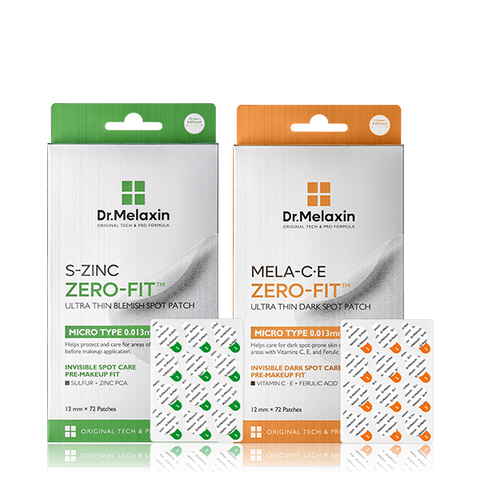
Since marks take time to fade, look for a patch thin enough to wear during the day as well as at night, so it gets more hours to work. The MELA-C·E ZERO FIT Ultra Thin Dark Spot Patch is a good example here. It combines vitamin C and niacinamide to help improve the appearance of post-blemish marks, while vitamin E and ferulic acid add antioxidant support. At just 0.013mm, it's thin enough to wear under makeup.
| Spot patch type | Best for | Avoid using on |
|---|---|---|
| Hydrocolloid | Spots that have come to a head or popped | Early bumps under the skin |
| Active ingredient | Early, unbroken pimples | Broken or popped skin |
| Microneedle | Deeper bumps just starting to form | Spots that have come to a head |
| Dark spot | Post-pimple marks | Active pimples and broken skin |
How to Use Pimple Patches
Here is a simple routine built around applying a pimple patch, whichever type you need.
- Wash your face with a gentle cleanser and pat the area completely dry.
- Pick a patch that covers the spot with a small margin around it.
- Press it on from the center outward so the edges seal.
- Apply the rest of your skincare around the patch, not over it.
- When it's time to take it off, peel it slowly from one edge while holding the skin next to it taut.
If you plan to wear a patch during the day, choose an ultra-thin one and press your makeup on over it instead of swiping.
Final Thoughts
Pimple patches work best when you match them to the spot. Reach for a hydrocolloid patch when a pimple has come to a head, an active ingredient patch when a bump is just starting, and a dark spot patch once the pimple is gone but the mark stays.
Whichever type you choose, the basics don't change: put the patch on clean, dry skin and give it enough time to work. Add daily sunscreen and a little patience, and you'll give your skin the best chance of moving past a breakout without a mark hanging around afterward.
![[TikTok Bestseller] Gifted Collagen Boost Set](http://drmelaxin.us/cdn/shop/files/ChatGPT_Image_Sep_30_2026_11_10_59_PM.png?v=1790790076&width=480)