

Key takeaways
- Brightening evens out skin tone and adds radiance, without changing natural skin color.
- Sun exposure, marks left by breakouts, dead skin buildup, and dehydration are the most common reasons skin looks dull or uneven.
- Daily sunscreen is the base of any brightening routine, since it helps prevent new pigment from forming.
- Niacinamide, vitamin C, tranexamic acid, and kojic acid each brighten in a different way, so they suit different concerns.
- Most people see a visible difference after 8 to 12 weeks of consistent use.
A brighter, more even complexion is one of the most common skin goals and one of the most achievable. Dull patches, dark spots, and a flat look usually trace back to a few identifiable causes, like sun exposure, leftover marks from breakouts, dead cell buildup, and dehydration.
Brightening skincare targets those causes. It fades the look of dark spots, clears away the layer of dull surface cells, and protects skin from the UV exposure that creates new pigment. Your natural skin color stays the same, and the tone across it becomes more even and more radiant.
What Makes Skin Look Dull or Uneven
Dullness has a few different sources, and they often overlap.
Sun-Triggered Pigmentation
UV exposure tells skin to make more melanin as protection. Over time, that pigment settles into clusters, which show up as sun spots and a patchy tone.
Marks Left by Breakouts and Irritation
When skin heals from a breakout, a scratch, or irritation, it can leave a flat mark behind that ranges from pink to brown. These marks fade on their own, but it often takes a long time.
Dead Skin Buildup
Skin sheds dead cells all the time, and when they linger, they scatter light instead of reflecting it, which makes skin look flat and gray.
Dehydration
Skin that's low on water reflects light unevenly, so it looks tired even when the tone is fine, and fine lines become more visible.
How to Brighten Skin, One Habit at a Time
Simple habits do most of the work here, and each one takes care of a different reason skin looks dull.
Protect Skin From UV Every Day
Sunscreen is the most important step in any brightening routine. UV exposure creates new sun spots and darkens existing ones, so brightening treatments struggle to get ahead without it. A lightweight sunscreen worn every morning, even on cloudy days, lets everything else do its job.
Exfoliate Gently
Exfoliants dissolve the dull layer of dead cells that keeps skin looking flat, which lets more light bounce back. Once or twice a week is enough to start, since over-exfoliating irritates skin and can leave marks that look worse.
Keep Skin Hydrated
Well-hydrated skin reflects light more evenly, which is a big part of that natural glow. A lightweight moisturizer, along with ingredients like hyaluronic acid, keeps that effect steady between treatments.
Use a Targeted Brightening Treatment
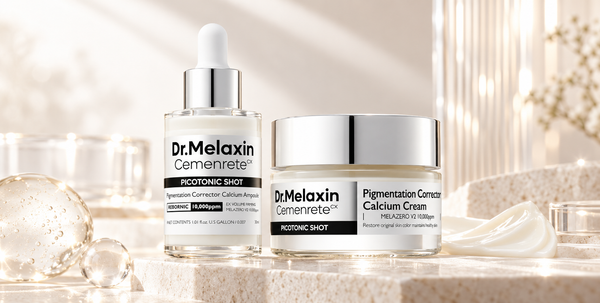
Dark spots and uneven tone can benefit from targeted ingredients that help improve the appearance of pigmentation and uneven tone. The Niacinamide Picotonic Shot Pigmentation Cream combines niacinamide at 20,000ppm with MELAZERO V2, which helps improve the look of dull, uneven-looking skin, and panthenol to keep skin hydrated and smooth.
Stay Consistent
Pigment fades on the skin's renewal schedule, so results show up gradually. Most people see a visible difference after 8 to 12 weeks of using the same routine, and switching products every couple of weeks resets the clock.

Brightening Ingredients Compared
Brightening ingredients work in different ways, which is why the one that suits a friend's skin may do little for yours. Most skin brightening products are built around one or two of the following.
| Ingredient | What it is | How it works | Best for | Watch for |
|---|---|---|---|---|
| REBORNIC | Dr.Melaxin's patented complex built around collagen- and elastin-supporting ingredients | Supports skin structure and renewal | Dull skin that has lost some bounce | Works gradually; pair with a pigment-targeting ingredient for dark spots |
| Vitamin C | A well-known antioxidant found in many brightening serums | Fades the look of dark spots and adds radiance | Everyday dullness and sun-exposed skin | Needs a stable formula; can sting sensitive skin |
| Tranexamic acid | An amino acid derivative popular for stubborn patches | Helps improve uneven pigmentation | Uneven patches | Results are gradual |
| Kojic acid | A compound made by fermentation, used to slow pigment production | Helps improve dark spots and uneven tone | Sun spots and post-breakout marks | Can irritate; start slowly |
| Niacinamide | A form of vitamin B3 that most skin tolerates well | Limits how much pigment reaches the surface and supports the skin barrier | Overall evenness and daily use | High strengths can cause flushing at first |
A Simple Brightening Skincare Routine
A brightening routine only needs a few steps, and the order matters more than the number of products.
Morning
-
Cleanse with a gentle cleanser.
-
Apply vitamin C to clean skin if you use it.
-
Moisturize.
-
Finish with sunscreen.
Evening
-
Cleanse to remove sunscreen and the day's buildup.
-
Use a chemical exfoliant two or three nights a week.
-
Apply your targeted brightening treatment.
-
Moisturize if your skin needs extra hydration.
Introduce one new active at a time and give each at least two weeks before adding the next, so skin can adjust and you can tell what's working. A quick patch test on the inner arm before using anything new on the face is worth the extra minute.
Mistakes That Slow Brightening Results
Four everyday habits can slow progress, and each one is easy to fix.
Skipping Sunscreen
Daily UV creates new pigment about as fast as products fade the old, so results stall without sun protection.
Over-Exfoliating
Irritation leaves marks of its own, which are the very marks a brightening routine is trying to fade.
Starting Everything at Once
When you start using multiple new products at the same time, and your skin reacts, there's no way to tell which one caused it. On top of that, stacking actives raises the odds of irritation.
Expecting Overnight Results
Exfoliation and hydration can improve complexion within days, but lasting change follows the skin's renewal cycle, which takes 8 to 12 weeks.
Final Thoughts
Brighter skin comes when you build a routine around a handful of habits and stick to it: protecting skin from UV, clearing away dull surface cells, keeping it hydrated, and giving a targeted ingredient enough time to work.
Give any new routine a few weeks and change one thing at a time. The result is skin that reflects light more evenly, in bathroom lighting and daylight alike.
![[TikTok Bestseller] Gifted Collagen Boost Set](http://drmelaxin.us/cdn/shop/files/ChatGPT_Image_Sep_30_2026_11_10_59_PM.png?v=1790790076&width=480)